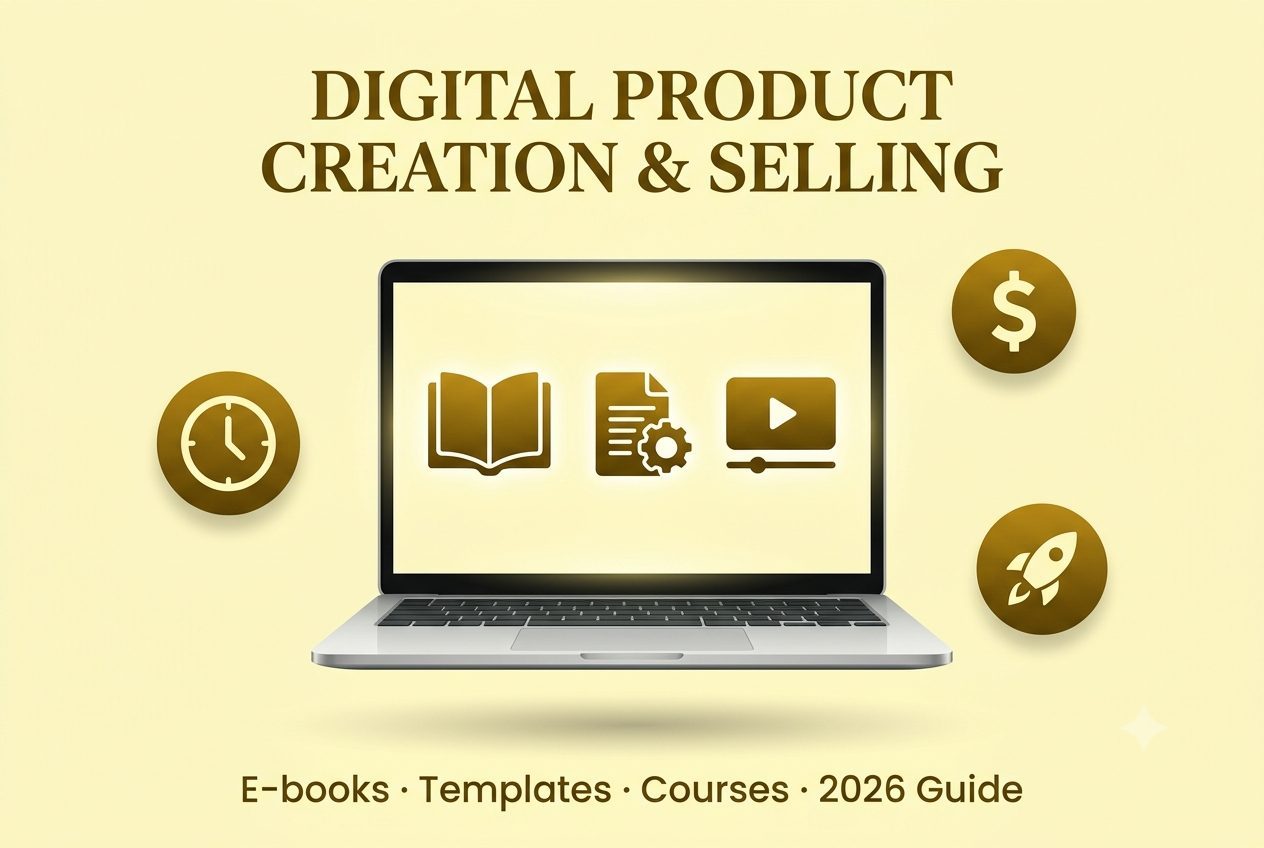
Digital Product Creation & Selling in Africa 2026
Discover how to build a sustainable business with digital products in Africa. Learn how to create and sell digital products, and capitalize on the $3 billion creator economy. Read now and start earning!
By Obed Avorlenu · · 19 min read
Important Disclaimer
This guide is for educational and informational purposes only. Platform fees, features, and policies are subject to change. Always verify current details on the official platform before committing. The author and VectricEarn are not responsible for any financial losses. This is not financial advice.
The 2026 Reality: Digital Products Are the New Currency of the Creator Economy
The creator economy in Africa is now estimated at over $3 billion. In 2026, the most profitable creators are not chasing viral moments — they are building sustainable businesses around digital products.
A growing appetite for digital products across Africa is being driven by inflationary pressures, global access to platforms, and the increasing willingness of consumers to pay for structured knowledge.
Digital entrepreneur Princewill Chuka Egbujor has contributed to over $500,000 in combined revenue impact through digital product sales. His PDF Profit Academy has helped thousands launch their first digital products.
"Create the content you want to get paid for. Not necessarily the content that makes you go viral."
— Fisayo Fosudo, Nigerian YouTuber & Visual Storyteller
The message is clear: Profitability is not accidental and it is not reserved for influencers with millions of followers. It is built.
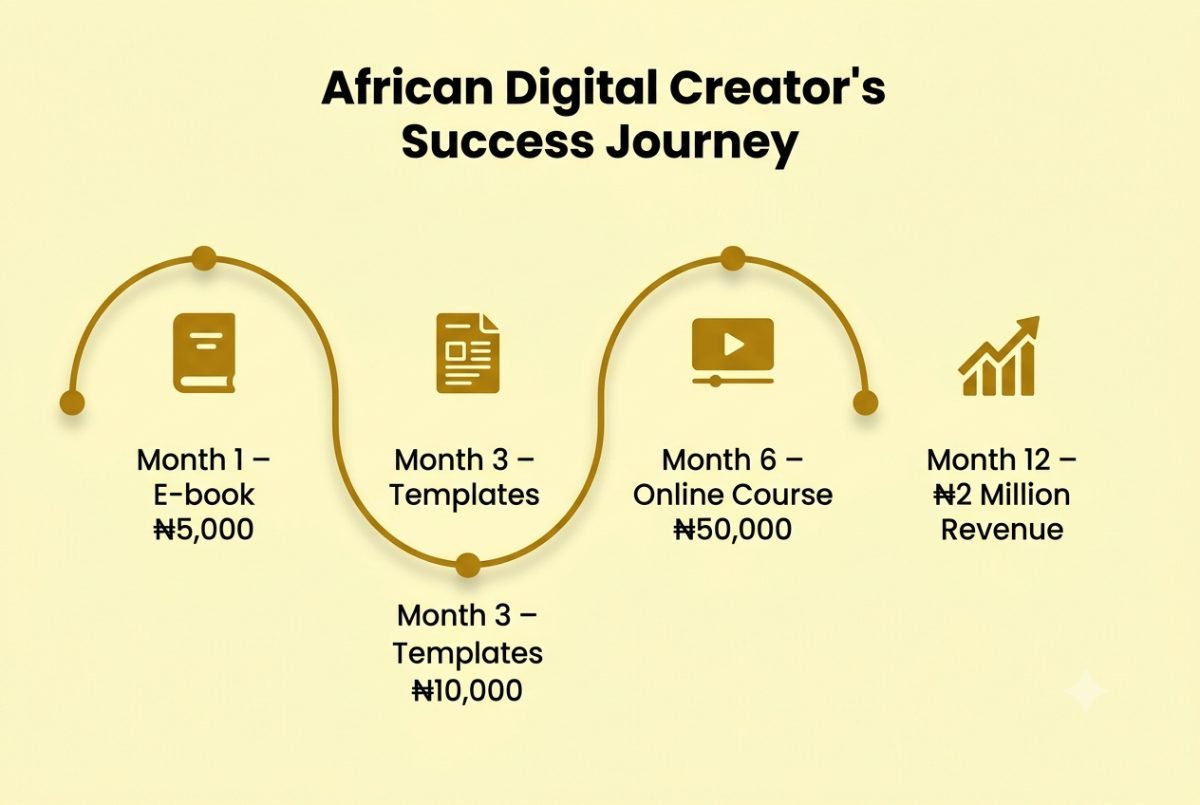
Success Story: From ₦5,000 E-book to ₦2 Million Digital Business
Creator: Adeola O. (Name changed for privacy)
Location: Lagos, Nigeria
Started: January 2025
Adeola was a freelance graphic designer who noticed that her clients kept asking the same questions: "How do I choose the right font?" and "What's the best software for beginners?"
Month 1: She created a 40-page PDF guide titled "Graphic Design for Non-Designers" and priced it at ₦5,000. She sold it through WhatsApp and Instagram.
Month 3: She had sold 47 copies — generating ₦235,000 in revenue. She then added a template pack (Canva templates for social media) priced at ₦10,000.
Month 6: She turned her e-book into a full online course with video lessons, priced at ₦50,000. She sold 15 spots in the very first week.
Month 12: Her combined revenue from e-books, templates, and courses exceeded ₦2 million. She now runs a thriving Facebook community of 3,000+ aspiring designers.
"I started with what I already had. I didn't wait to be perfect. I just started selling and improved as I went."
— Adeola O.
Step 1: What Exactly Is a Digital Product?
A digital product is any piece of content or access that can be delivered electronically, without physical shipping or inventory. You create it once, and you can sell it to one person or ten thousand people without producing anything new each time.
For African creators, digital products solve a real practical problem. You do not need:
A physical shop
A printer
A courier service
A warehouse
You need knowledge, a device to record or write on, and a platform to handle delivery and payment. That combination is now within reach for anyone with a smartphone and reliable internet access.
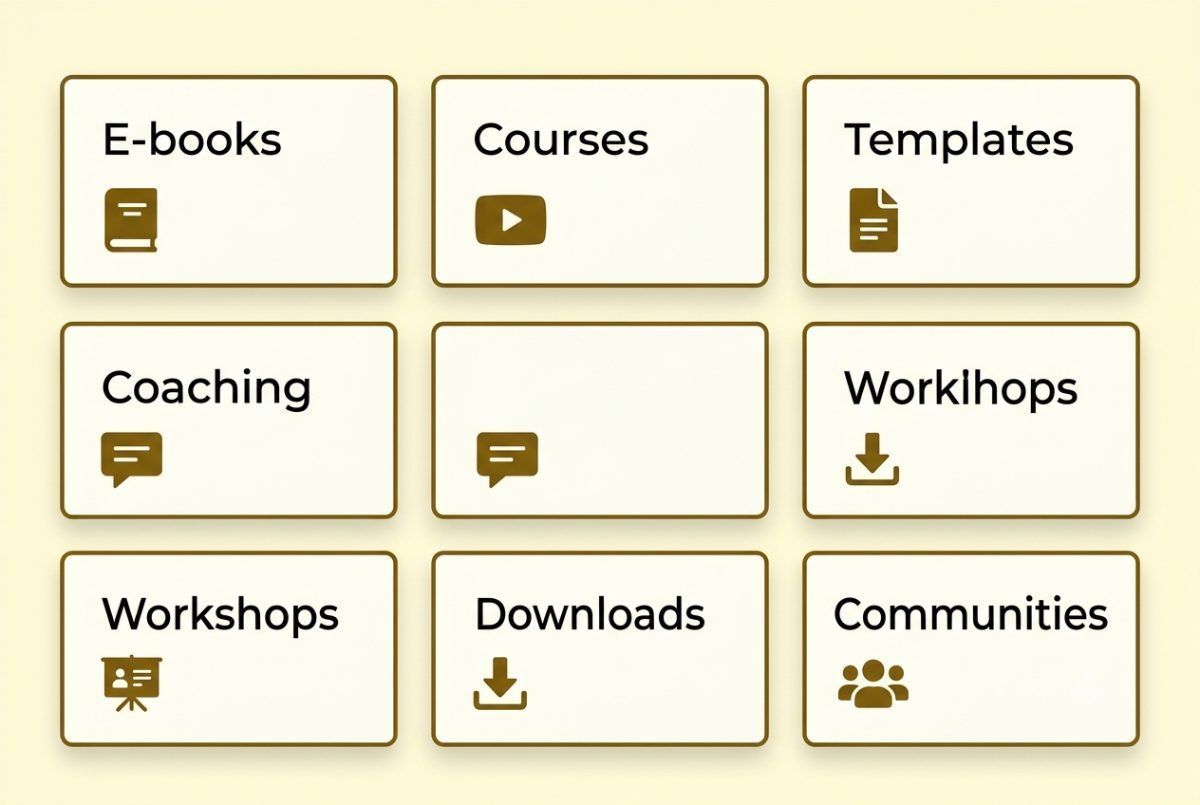
The Most Common Digital Product Types for African Creators
E-books and PDF Guides: Written documents covering a specific topic, skill, or process. Best for writers, experts, and educators.
Online Courses: Structured learning delivered via video, audio, or text modules. Best for teachers, coaches, and professionals.
Templates and Toolkits: Ready-made documents, spreadsheets, or design files that save buyers time. Best for designers, business owners, and organisers.
Coaching Packages: Paid one-on-one or group sessions delivered via video call. Best for coaches, consultants, and mentors.
Workshops and Webinars: Live or recorded sessions on a specific subject. Best for trainers, educators, and experts.
Digital Downloads: Canva templates, Excel dashboards, or Notion planners. Best for creators across all niches.
Paid Communities: Subscription-based groups where members pay for access, accountability, and connection. Best for community builders and coaches.
Each of these formats has a different creation process, a unique price range, and a different type of buyer.
Image 2 Concept: Digital Product Types
Visual Concept: Modern, clean flat illustration with a cream white background. Seven product type cards arranged in a grid: E-books (book icon), Courses (video icon), Templates (document icon), Coaching (chat icon), Workshops (presentation icon), Downloads (download icon), and Communities (group icon). Each card is outlined in dark gold.
Style: Flat illustration style, 3:2 aspect ratio.
Step 2: Is Your Knowledge Actually Worth Paying For?
This is the question most creators get stuck on. The answer is almost certainly yes.
Knowledge has value when it saves someone time, reduces their uncertainty, or helps them achieve a result they could not easily reach on their own.
The Honest Self-Assessment
Ask yourself these three core questions:
Have people ever asked you to explain how you do something?
Have you figured out a process, a system, or a shortcut that others around you do not know?
Is there a topic you find yourself teaching or explaining repeatedly?
If you answered yes to any of those questions, there is a viable product inside your knowledge.
"You do not need to be the most qualified person in your field. You simply need to know more than the person who is currently struggling with the problem you can solve."
Step 3: What to Sell — Best-Selling Digital Product Categories in Africa
1. Nigeria Market Overview
Study Notes & Exam Packs: Subject summaries, past-paper solutions, and exam guides. Price Range: ₦5,000 – ₦15,000.
CV Templates & Job-Seeking Packs: ATS-friendly CVs, cover letters, and interview guides. Price Range: ₦5,000 – ₦20,000.
Business & Hustle Kits: Invoices, pricing calculators, and business registration guides. Price Range: ₦10,000 – ₦50,000.
Meal Plans & Fitness Programmes: 4-week meal plans and home workout programmes. Price Range: ₦5,000 – ₦15,000.
2. Ghana Market Overview
Study Notes & Exam Packs: WASSCE subject summaries and past-paper solutions. Price Range: GH¢20 – GH¢50.
CV Templates & Job-Seeking Packs: ATS-friendly CVs, cover letters, and interview guides. Price Range: GH¢20 – GH¢80.
Business & Hustle Kits: Invoices, pricing calculators, and business registration guides. Price Range: GH¢50 – GH¢200.
Meal Plans & Fitness Programmes: 4-week meal plans and home workout programmes. Price Range: GH¢20 – GH¢60.
3. Kenya Market Overview
Study Notes & Exam Packs: KCSE subject summaries and past-paper solutions. Price Range: KSh 200 – KSh 1,000.
CV Templates & Job-Seeking Packs: ATS-friendly CVs, cover letters, and interview guides. Price Range: KSh 250 – KSh 1,500.
Business & Hustle Kits: Invoices, pricing calculators, and business registration guides. Price Range: KSh 500 – KSh 2,500.
Meal Plans & Fitness Programmes: 4-week meal plans and home workout programmes. Price Range: KSh 200 – KSh 800.
4. South Africa Market Overview
The local market has its own shape and urgencies:
Study Notes & Exam Packs: Matric subject summaries and past-paper solutions. Price Range: R49 – R199.
CV Templates & Job-Seeking Packs: ATS-friendly CV templates and interview guides. Price Range: R49 – R199.
Small Business & Hustle Kits: Invoice templates, pricing calculators, and business registration guides. Price Range: R79 – R499.
Meal Plans & Fitness Programmes: 4-week meal plans and budget meal plans. Price Range: R99 – R349.
Key Insight: The "budget meal plan" (e.g., eat healthy on R700 a month) solves a real local problem and is a constant bestseller.
Regional Revenue Examples
Nigeria: "How to Pass JAMB" guide sold at ₦5,000 across 100 sales generates ₦500,000.
Ghana: "WASSCE Study Pack" sold at GH¢100 across 50 sales generates GH¢5,000.
Kenya: "KCSE Exam Prep Course" sold at KSh 1,500 across 30 sales generates KSh 45,000.
South Africa: "Matric Study Template" sold at R199 across 100 sales generates R19,900.
Step 4: How to Create Your Digital Product
Creating an E-book or PDF Guide
Why PDF is the right choice for African creators: It preserves your layout across every device, doesn't require additional reading software, and handles worksheets, tables, and visuals without issues.
Step-by-Step Creation Process:
Choose your topic: Pick something you know well that people regularly ask you about.
Outline your content: Structure your knowledge into clear chapters or sections.
Write the content: Use free writing tools like Google Docs or Microsoft Word.
Format your PDF: Use Canva for professional visual layouts.
Create a cover: Use Canva’s built-in e-book cover templates.
Convert to PDF: Export your completed layout as a PDF document.
Pro Tip: You do not need a large audience or major startup capital to begin.
Creating Templates
Templates are one of the easiest digital products to build because you likely already use them in your daily routine.
Popular Template Ideas:
ATS-friendly CV templates
Social media content calendars
Invoice and quotation templates
Budget trackers (built via Excel or Google Sheets)
Business plan frameworks
Meal planning schedules
Event planning checklists
Project management workflows
How to Create Them:
Open Google Docs, Sheets, or Canva.
Design the template as if you were using it for your own business.
Add clear step-by-step instructions for the user.
Export as a PDF or shareable template link.
Creating an Online Course
Step-by-Step Creation Process:
Choose your course topic: Identify the specific problem your course will solve.
Outline your curriculum: Break your content into structured modules and individual lessons.
Create your assets: Draft slides, worksheets, quizzes, and scripts.
Record your videos: Use your smartphone (good lighting and clean audio matter far more than expensive camera gear).
Edit your content: Use accessible video editors like CapCut or Canva.
Upload to your platform: Host your course on platforms like Selar, Teachable, or Gumroad.
Top Platforms for African Creators
Selar: Designed specifically for African creators selling to local and international buyers. Features a low transaction percentage fee, free and paid tiers, and full local payment integration (Naira, Cedis, Kenyan Shillings, and Mobile Money).
Gumroad: Great for global beginners testing simple products. Uses a flat 10% transaction fee model, though local African payment methods are limited.
Teachable: Ideal for structured video courses. Requires monthly subscription fees plus transaction fees, and relies primarily on Stripe or PayPal.
Skiltec: A growing marketplace for Nigerian creators that charges a 10% commission and seamlessly supports Naira payments.
Step 5: Pricing Your Digital Product
Pricing is the conversation most African creators avoid until it starts costing them revenue.
The $100–$499 Sweet Spot
The $100–$499 local currency equivalent range typically yields the highest overall revenue, even with lower total sales volumes.
Most creators start by underpricing their work. Lower prices do not guarantee more buyers, and they frequently reduce perceived value and net earnings.
Should You Price in Dollars or Local Currency?
Always use local currency if your primary target market is inside Africa. Buyers are significantly more likely to abandon checkout pages if they are forced to convert prices from US Dollars.
Value-Based Pricing Strategy
Most first-time creators incorrectly base their pricing on the effort or time spent creating the product. Buyers do not care about your time investment — they care about the concrete result the product delivers.
How to apply value-based pricing:
Identify the exact problem your digital product solves.
Estimate what achieving that solution is financially or practically worth to your buyer.
Set your price at roughly 10% to 20% of that total value.
Example: If your course saves a business owner ₦500,000 in wasted advertising spend, charging ₦50,000 for the course is entirely reasonable and easy to justify.
The Three-Tier Pricing Model
Offering three distinct tiers consistently outperforms single-option pricing or offering too many choices:
Basic Tier (Entry-Level): Price: ₦10,000. Includes: E-book only.
Standard Tier (Most Popular): Price: ₦25,000. Includes: E-book + template toolkit.
Premium Tier (High-Value): Price: ₦50,000. Includes: E-book + templates + 1-on-1 strategy call.
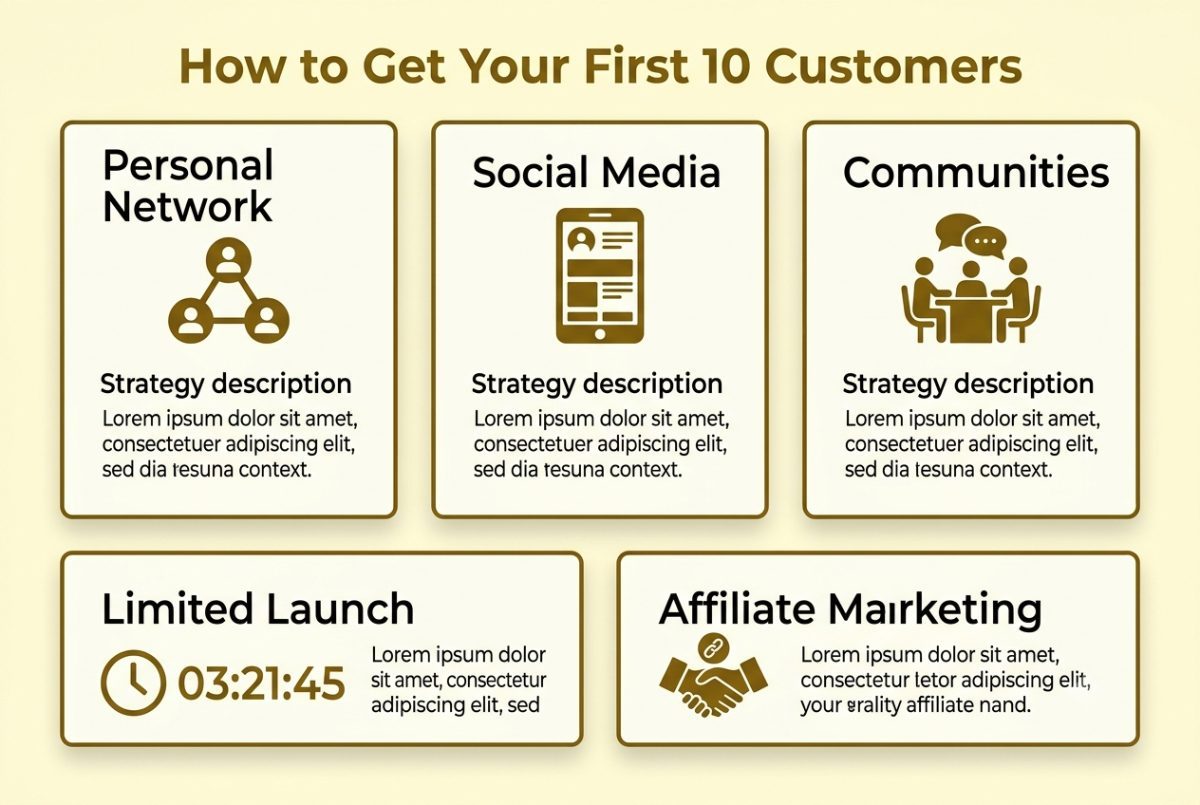
Step 6: How to Get Your First 10 Customers
Where do you find your initial buyers? Here is a step-by-step playbook to secure your first 10 sales.
Strategy 1: Tap Into Your Personal Network
Your first customers are usually people who already know and trust you.
List 20 people who respect your knowledge or work in your field.
Send a direct, personalized message: "Hey [Name], I've created a comprehensive guide on [topic] to help solve [problem]. I'm looking for 10 people to review it at an exclusive launch price of [price]. Let me know if you'd like the link!"
Offer an early-bird discount in exchange for an honest testimonial.
Strategy 2: Value-First Social Media Posts
Publish an insightful post addressing a pain point related to your product.
Include a call to action at the bottom: "I compiled my full step-by-step system into a guide. Comment 'INTERESTED' and I'll send you the details."
Send the purchase link to everyone who comments.
Follow up via direct message: "Here is the link! I'm offering a special launch discount for the next 48 hours."
Strategy 3: Participate in Niche Communities
Join active WhatsApp, Telegram, or Facebook groups where your target audience hangs out.
Answer questions and provide helpful, unselfish value without immediately dropping sales links.
When members ask deeper questions, introduce your digital product as the complete solution.
Strategy 4: Execute a Limited-Time Launch
Pick a hard launch date and build anticipation for 5 to 7 days prior.
Create real urgency: "Only 10 copies available at the initial early-bird price."
Post daily countdown updates across your active social channels.
Strategy 5: Launch an Affiliate Program
Enable the built-in affiliate feature on platforms like Selar.
Offer a generous 20% to 30% commission rate to promoters.
Share your affiliate program with peers and let them market your product to their audiences.
Step 7: Where to Sell Your Digital Products
Platform Overview
Selar: Best for African creators. Uses a 7-10% fee model (with free/paid tiers). Supports mobile money (MTN MoMo, Telecel, M-Pesa) and local currencies (NGN, GHS, KES, ZAR, USD).
Gumroad: Best for global beginners. Charges a 10% flat fee. Does not support local African mobile money; operates in USD, EUR, GBP.
Teachable: Best for structured video courses. Charges $39/month plus a 5% transaction fee. Does not support local African mobile money; operates in USD, EUR.
Skiltec: Best for Nigerian creators. Charges a 10% commission fee. Supports local mobile money and Naira payments.
Selar: The African Creator's Home Base
For anyone serious about selling digital products to African audiences, Selar is foundational.
Why Selar works for African creators:
Native handling of Naira, Cedis, Shillings, and Rand.
Direct integration with local bank transfers and mobile money wallets.
Smooth payout systems that skip complex international banking hurdles.
Designed specifically with African buyers in mind.
Built-in support for product bundling, upsells, automated course delivery, and affiliate recruitment.
Available Plans: Selar offers flexible Free and Paid tiers. Premium features include automated coupon codes, order order-bumps, drip content for online courses, and custom product variations.
Gumroad: The Simplicity Choice
Why Gumroad works: Sign up, upload your file, set your price, and receive a working product checkout link instantly. There are no monthly subscription fees on their base plan.
Fee Structure: A flat 10% transaction fee on every sale.
When to use Gumroad: Ideal when you want to quickly validate whether an audience outside Africa will purchase your product.
Teachable
Best suited for full video courses requiring student management, quizzes, and completion certificates. Note that hosting here requires integrated PayPal or Stripe accounts, which can limit access for some local buyers.
Skiltec
A specialized digital marketplace built by a Nigerian developer allowing creators to sell e-books, printables, design assets, and templates while keeping 90% of their earnings.
Step 8: Marketing Your Digital Product
The Brand Clarity Formula
"I help (target audience) understand (specific topic) so they can (desired outcome)."
— Fisayo Fosudo
Example Application: "I help Nigerian freelancers understand value pricing so they can double their monthly income."
Selling Without Sounding Salesy
"You must adopt the identity of a helpful salesperson. Marketing attracts potential leads, but sales closes them. Mentioning your price before clearly explaining the value is a guaranteed way to lose a sale."
— Paul Foh, CEO of Sales Factory Global
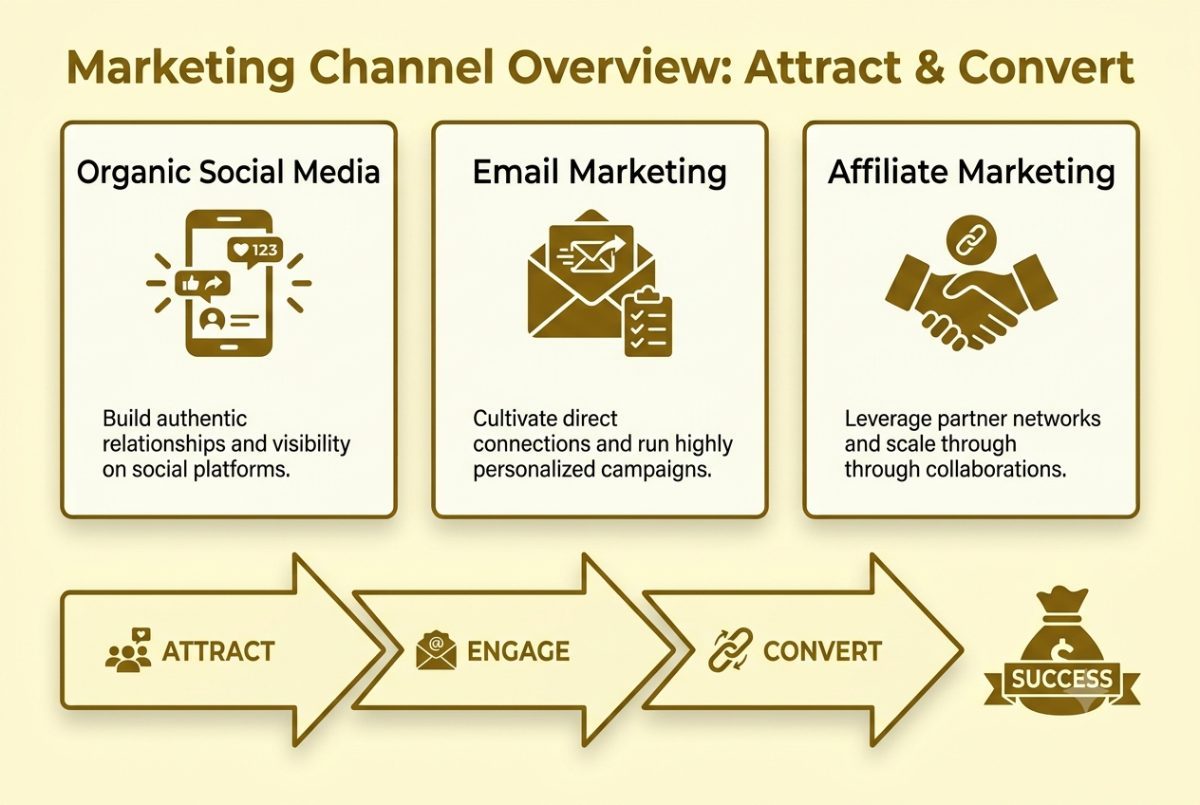
Three Reliable Marketing Channels
Organic Social Media (Free): Share actionable tips across Instagram, Facebook, LinkedIn, or TikTok. Build genuine trust before asking for a sale.
Email Marketing (Low Cost): Start building an email list from day one. Send value-driven content regularly and launch new digital products directly to your subscribers.
Affiliate Marketing (Performance-Based): Set up an automated affiliate system using Selar. Allow partners to market your product for a commission, leveraging established audiences.
Step 9: Critical Mistakes to Avoid
Mistake 1: Spending Months Creating Before Validating Demand
Building a product nobody wants is the single most expensive mistake a creator can make.
Solution: Validate your topic first. Ask your audience if they want it, or pre-sell the idea before writing. A single paying customer is better proof than months of assumptions.
Mistake 2: Pricing Too Low
Setting ultra-low prices lowers your perceived quality and forces you to hunt for massive volume.
Solution: Price according to real value. If your template saves someone ₦500,000 in effort, charge a price that reflects that transformation.
Mistake 3: Creating Broad Products for "Everyone"
Broad products fail to connect with specific buyers.
Solution: Solve one precise problem for one precise group. Instead of "How to Start a Business," write "How to Register a Business in Nigeria in 2026."
Mistake 4: Ignoring Email Marketing
Relying entirely on social media algorithms leaves your distribution vulnerable.
Solution: Collect email addresses from day one. You own your email list; you do not own your social media followers.
Mistake 5: Copying Competitors
Blindly copying other creators leads to identical products and price wars.
Solution: Study the market to find gaps. Ask "What did this creator leave out?" and fill that gap with your unique perspective.
Frequently Asked Questions
1. Can I sell digital products using only my smartphone?
Yes. You can write e-books using Google Docs, design layouts using Canva, record lessons on your phone camera, and upload them directly to Selar.
2. Do I need a custom website to start selling?
No. Platforms like Selar and Gumroad provide hosted checkout pages. You only need a social media account and a product link to start accepting orders.
3. How do I accept customer payments in Ghana?
Use Selar. It natively supports Ghana Cedis and mobile money payments (MTN MoMo, Telecel Cash, and AT Money).
4. How do I receive payment payouts in Kenya?
Use Selar. It handles Kenyan Shillings and integrates directly with M-Pesa for seamless seller payouts.
5. How do I collect payments in South Africa?
You can use Selar or Gumroad. Selar natively supports ZAR transactions, while Gumroad processes international card payments.
6. Can I sell my digital products to international customers?
Yes. Selar allows multi-currency listings (including USD), while platforms like Gumroad and Teachable process global credit cards seamlessly.
7. What should I do if nobody buys my digital product?
Treat zero sales as feedback rather than failure. Reach out to your audience to understand why they passed. Did they need a lower price, a different format, or a different problem solved? Adjust and relaunch.
8. How much should I charge for my very first digital product?
Price based on the value delivered. For a beginner e-book in Nigeria, charging between ₦5,000 and ₦10,000 is a standard starting baseline.
9. How do I prevent people from pirating or sharing my PDF?
While you cannot completely eliminate piracy, you can deter it by adding custom watermarks, placing your name/brand on every page, and offering bonus access (like a private community or Q&A call) that pirates cannot copy.
10. Do I have to use my real name to sell online?
No, you can operate under a business brand or pseudonym. However, using your real name and face generally builds trust faster with African buyers.
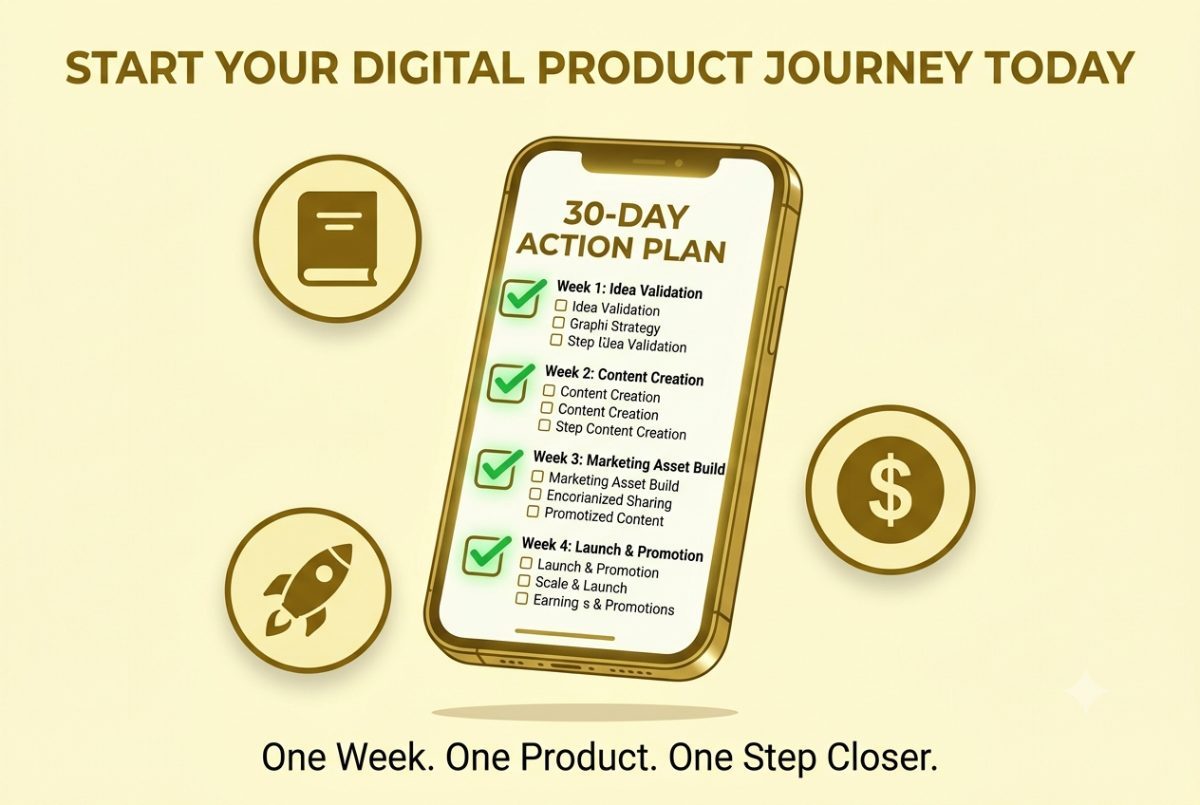
The 30-Day Action Plan
Week 1: Validate Your Idea
Identify your core skill or expertise.
Choose one product format (E-book, Template, or Course).
Ask your target audience what specific problems they will pay to solve.
Research existing products to analyze market pricing.
Week 2: Create Your Content
Write out a detailed outline.
Draft, design, or record your product content.
Format your layout using Canva or Google Docs.
Design an eye-catching product cover image.
Week 3: Set Up Your Storefront
Write a clear, benefit-driven product title and description.
Upload your digital files.
Set up your tiered pricing options.
Week 4: Launch & Market
Formally announce your product launch across social media.
Send an announcement email to your subscriber list.
Enable an affiliate program to enlist partner promoters.
Collect feedback and testimonials from your first 10 buyers.
The Hard Truth About Selling Digital Products
A realistic look at digital product sales:
Not every person in your network will buy.
Your initial product idea might require tweaks before it sells well.
You must continuously refine your marketing messaging.
Marketing your product requires as much effort as creating it.
Why Creators Fail:
Creating products without asking buyers what they want.
Underpricing out of fear.
Quitting after failing to make sales in the first week.
Neglecting active marketing and distribution.
The Blueprint for Success:
Solve a real, painful problem, charge based on the value of the solution, and market your offer consistently.
Quick Reference: Digital Product Pricing Guide
E-book / PDF Guide
Entry Tier: ₦5,000 – ₦10,000
Standard Tier: ₦15,000 – ₦25,000
Premium Tier: ₦30,000 – ₦50,000
Template Pack
Entry Tier: ₦3,000 – ₦8,000
Standard Tier: ₦10,000 – ₦20,000
Premium Tier: ₦25,000 – ₦40,000
Online Course
Entry Tier: ₦20,000 – ₦40,000
Standard Tier: ₦50,000 – ₦100,000
Premium Tier: ₦150,000 – ₦250,000
Coaching Package
Entry Tier: ₦50,000 – ₦100,000
Standard Tier: ₦150,000 – ₦300,000
Premium Tier: ₦500,000+
Your One Action for Today
Open your notes app right now.
Write down ONE skill or topic that people constantly ask you to explain.
Identify ONE person or group who would pay money to learn that skill.
Pick ONE format (e-book, template, or course) to deliver that knowledge.
The creator earning steady revenue from a ₦5,000 PDF guide isn't uniquely gifted — they simply took what they knew, packaged it cleanly, and put it up for sale. You can do the exact same thing starting today.
Free Business Tools Referenced in This Guide
Explore our suite of financial planning and business development tools to prepare for your launch:
Savings Goal Calculator: Estimate and plan your initial product creation and marketing launch budget.
Freelance Rate Calculator: Determine how to price your services and products to meet your personal income goals.
Investment Return Calculator: Project potential long-term returns from reinvesting your digital product profits.
Side Hustle Finder: Get tailored side-hustle recommendations aligned with your existing skill set.
Online Business Idea Generator: Brainstorm online business concepts customized to your budget, interests, and target market.
USD to Local Currency Converter: Convert international pricing into local African currencies instantly.
(Note: All calculators and tools are accessible at the bottom of the VectricEarn homepage.)
About the Author & Platform
VectricEarn helps African creators, freelancers, and entrepreneurs discover legitimate online income opportunities, learn digital skills, build remote careers, and execute practical wealth-building strategies.
Referenced Sources & Industry Reports
BusinessDay NG (2026) — Beyond Virality: How to Build a Profitable Business from Digital Content Creation
BusinessDay NG (2026) — Nigerian Digital Entrepreneur Princewill Chuka Egbujor Expands Access to Knowledge Monetization
Selar Blog (2026) — Best Pricing Strategies for Selling Digital Products in Africa
Kobocourse (2026) — Digital Products for African Creators: From Idea to First Sale
Acalytica (2026) — The Best-Selling Digital Product Categories in South Africa
Medium (2026) — Top Platforms to Sell Your Ebooks and Make Passive Income
Disrupt Africa (2026) — RHUCE Launches Platform to Help African Creators Monetise Skills
Product Hunt (2026) — Skiltec: Digital Marketplace for African Creators
Last Verified: July 2026