Start Dropshipping in South Africa with Shopify 2026
Start a successful Shopify dropshipping business in South Africa. Navigate local market challenges, launch your online store, and make your first sale!
By Obed Avorlenu · · 8 min read

Let me guess. You have seen those TikTok videos —
Make R10,000 in your first week dropshipping!
— and you thought it sounded too good to be true.
You are right. It is too good to be true. But here is what is true: dropshipping in South Africa is one of the lowest-friction ways to start an online business — no stock to hold, no warehouse to rent, no upfront capital tied up in inventory. South Africa's e-commerce market reached R71 billion in 2024, growing 29% year-on-year, with an estimated 5,500+ active Shopify stores in Cape Town alone.
The opportunity is real. The market is growing. And you can start with basically nothing.
But here is the catch: you cannot just copy what works in the US or Europe and expect the same results. South Africa is different. Shipping times are longer. Customs is unpredictable. Payment behaviour is different.
I have seen too many people jump in blindly and fail. So let me walk you through exactly how to do this the right way — step by step.
Step 1: Pick Your Niche — Do Not Sell Everything to Everyone
This is where most beginners mess up. They open a "general store" and list 500 random products. Nobody buys because nobody trusts a store that sells phone cases and kitchen knives and baby clothes.
Here is what you need to do: Pick a focused niche — a clear customer group with a specific problem you are solving. Think about products that have practical use, clear benefits, and a realistic selling price.
Winning Niches for the South African Market
Home and living: Decor, unique kitchen gadgets
Health and beauty: Skincare, wellness supplements
Electronics accessories: Phone cases, chargers, wireless headphones
Kids and baby products: Niche toys, specialized baby gear
Fitness and outdoor gear: Workout accessories, camping essentials
Pro tip: Use TikTok, Instagram, and Facebook to see what South Africans are already buying. Social commerce is huge here — many consumers discover products through short-form content long before searching directly on marketplaces.
Step 2: Find a Reliable Supplier — This Makes or Breaks You
Your supplier is your business partner. If they are slow, unreliable, or sell low-quality products, your reputation is destroyed.
Evaluating Your Sourcing Route
Option A: Local Suppliers
Pros: Faster delivery, stronger customer trust, easier returns.
Speed: Delivery speeds can be next day to Cape Town, and 1–3 days nationally if you use local fulfilment.
Option B: International Suppliers (AliExpress, CJ Dropshipping)
Pros: Wider product selection, much lower product costs.
Cons: 1–3 week delivery times and unpredictable customs delays.
Where to Find Local SA Suppliers
Shopify Collective: A free supplier network that connects you with other Shopify brands to source and sell their products directly.
ZA Dropshipping: A dedicated South African supplier that handles all domestic logistics and sourcing.
Perfect Dealz: Offers a reliable dropshipping option with tiered bulk pricing (5% to 12% off).
Snazzyway Dropshipping: Another established South African supplier known for reliable delivery networks.
My advice: Start with local suppliers if you can. South African customers are used to fast delivery from platforms like Takealot and Shein. If you take 3 weeks to deliver, they will not come back.
Step 3: Build Your Shopify Store — Keep It Simple
Shopify is the absolute best platform for dropshipping in South Africa. It integrates seamlessly with everything you need — suppliers, payment gateways, and local shipping apps.
Action Checklist for Setup
Sign up for Shopify: They offer a 3-day free trial, followed by an introductory rate of roughly $1 per month for the first 3 months.
Pick a theme: Use a free Shopify theme (like Dawn). Keep it clean and professional. Do not overcomplicate the design.
Add your products: Use a dropshipping app like AutoDS to import products automatically. AutoDS automates listing imports, price/stock monitoring, orders, and tracking — saving you time and reducing errors.
Set your prices: Factor in your base product cost, shipping rates, payment gateway fees, and Shopify's transaction fees.
Shopify Costs in South Africa (June 2026)
Starter plan: ~R81/month
Basic plan: ~R470/month
Grow plan: ~R1,280/month
My advice: Start with the Basic plan. You can always upgrade later as your transaction volume increases.
Step 4: Set Up Payments — This Is Critical
Here is something most YouTube tutorials do not tell you: Shopify Payments is NOT available in South Africa. You must use a third-party payment gateway to accept Rands (ZAR).
Top Payment Gateways for South African Shopify Stores
Paystack: Best for startups and fast onboarding. It is developer-friendly, Stripe-owned, and fully localised for African markets.
Peach Payments: Ideal for high-volume retailers due to its lower percentage fees on large turnover.
PayFast: Excellent for general use as it is the most widely recognized and trusted payment brand in SA.
Netcash: Great for secure, stable transactions using a trusted hosted gateway layout.
How to Set It Up
Sign up with your chosen provider (e.g., Paystack or Peach Payments).
Provide your CIPC registration documents (or personal ID if operating as a sole proprietor), proof of address, and a valid South African ID.
Link your South African business or personal bank account.
Connect the gateway to your Shopify store via the Payments section in your Shopify admin panel.
Important Note: Shopify charges an additional transaction fee (ranging from 0.2%–2.0% depending on your plan) when you use a third-party gateway. Always factor this extra cost into your product markups!
Step 5: Set Up Shipping and Fulfilment
South African Shopify stores generally operate under two fulfilment models:
Option 1: Self-Fulfil — You pack orders from home or a small local space. This works perfectly at low order volumes (under 30 orders per day).
Option 2: Outsource to a 3PL (Third-Party Logistics Provider) — They receive your bulk stock, store it, pick and pack orders, and dispatch them via couriers automatically whenever a customer pays on your store.
Key Shipping Apps for South Africa
Bob Go, uAfrica, and Shiplogic: These are the three dominant Shopify shipping and multi-courier management apps in the SA market.
The Courier Guy: Integrates directly to allow sellers to provide real-time courier quotes and generate shipping labels easily.
TUNL: Makes international shipping affordable and simple with real-time international parcel tracking.
Pro tip: Use Bob Go. It seamlessly connects 11 South African domestic couriers and automatically selects the cheapest or fastest option based on the customer's exact destination.
Step 6: Make Your First Sale — Marketing That Actually Works
You have built the store. Now you need eyeballs on your products.
Free Marketing Channels (Start Here)
WhatsApp Status and Groups: South Africa is a WhatsApp-first country. Share your products organically in relevant local community groups.
Facebook Marketplace: List your dropshipped products directly here. It costs R0 and is highly effective for driving local traffic.
Instagram and TikTok: Create short-form video content showcasing your products in use. Social commerce is massive in SA right now.
SEO: Optimise your product titles and descriptions for common Google searches.
Paid Marketing (When You Have Budget)
Facebook and Instagram Ads: South Africa enjoys lower Cost Per Mille (CPMs) than Western markets, meaning your ad budget goes much further here.
TikTok Ads: Perfect for targeting younger South Africans who discover trends through short-form video feeds.
My advice: Start with free channels to validate your products. Once you have a product that proves it can sell, put R1,000+ behind targeted Facebook ads to scale up the volume.
Step 7: The Legal Stuff — Do Not Ignore This
Dropshipping in South Africa is 100% legal. But you need to play by the rules to avoid headaches down the line:
Company Registration: Register with the CIPC if you want to build a serious, scalable brand.
Taxes: Comply with SARS by declaring your e-commerce income and paying your taxes accordingly.
Consumer Rights: Follow the Consumer Protection Act (CPA). Be completely transparent about delivery times, and have a clear, fair refund policy.
You can absolutely start as a sole proprietor using your personal ID and personal bank account. As your monthly turnover grows, register a private company (Pty Ltd) for better legal protection and tax efficiency.
Your 7-Step Action Plan
Pick a niche — One focused category, not 500 random products.
Find a supplier — Start with local SA suppliers for faster delivery speeds.
Build your Shopify store — Sign up, pick a clean theme, and add products.
Set up payments — Integrate Paystack, Peach Payments, or PayFast.
Set up shipping — Connect your store to Bob Go, uAfrica, or The Courier Guy.
Start marketing — Utilize WhatsApp, Facebook Marketplace, Instagram, and TikTok.
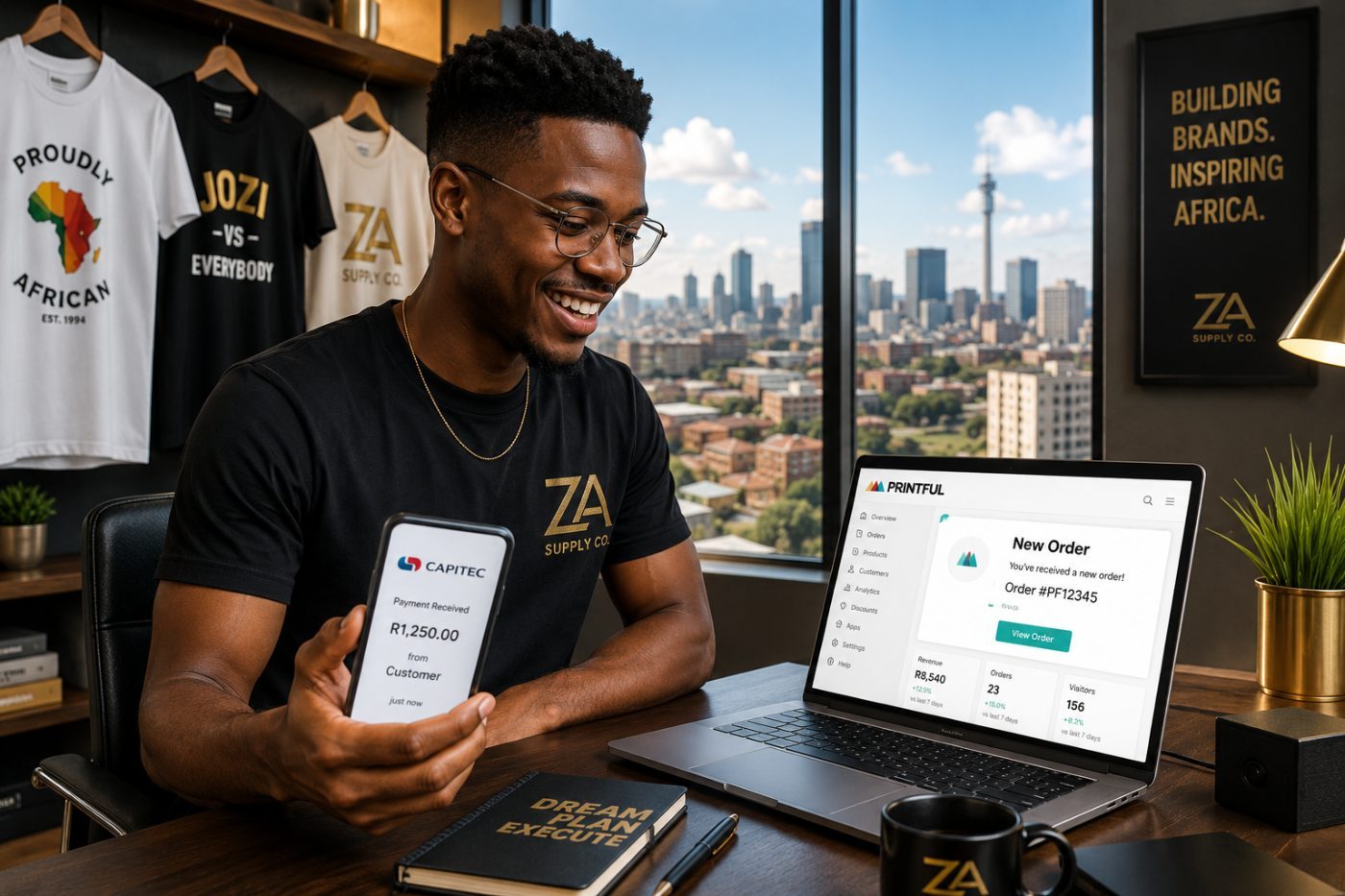
Make your first sale — Celebrate, optimize, and then do it again!
The Hard Truth
Dropshipping is not a get-rich-quick scheme. It takes real work, consistency, and learning from mistakes. But it remains one of the most accessible ways to start an online business in South Africa with R0 tied up in stock—you only pay for products after your customer has already paid you.
South Africa's e-commerce market is projected to more than double from USD 754 million in 2024 to USD 1.78 billion by 2030. The opportunity is here. The question is: are you going to take it?
Your Call to Action
Open your phone right now. Go to shopify.com/za. Sign up for the $1 for 3 months trial. Pick one niche. Add five products. Set up Paystack.
Then DM me or drop a comment below: what niche are you starting with? I will personally reply with tips to help you secure that very first sale.
The South African e-commerce market is growing. Your store could be next. 🇿🇦