Invest in Stocks from Africa
Learn how to invest in stocks from Africa with our beginner's guide. Discover mobile-first platforms and start investing today
By Obed Avorlenu · · Updated July 18, 2026 · 3 min read

The Myth That Kept You Out
Most people on the continent grew up hearing that stocks are for the rich or for Westerners. That was true 10 years ago. It is not true today. Mobile-first platforms have made global markets accessible to anyone with a smartphone and a valid ID.
Step 1: Understand What You Are Buying
When you buy a stock, you buy a tiny piece of a real company. If Apple earns more profit next year than this year, your piece becomes more valuable. If it earns less, it becomes less valuable. You only lose permanently if you sell at a loss — or the company collapses entirely.
Most new investors lose money not because the market crashed, but because they panicked and sold at the wrong time.
Step 2: Choose the Right Platform
These platforms accept African users and allow fractional share investing (buying partial shares so you can start small):
Bamboo (Nigeria) — invest in US stocks directly in naira. Simple app, beginner-friendly.
Trove (Nigeria) — US and Nigerian stocks in one app.
Chaka (Nigeria) — licensed by the SEC, stocks and ETFs.
Hisa (Kenya/East Africa) — US stocks in Kenyan shillings via M-Pesa.
EasyEquities (South Africa) — JSE and US markets, excellent for South Africans.
Step 3: Start With ETFs, Not Single Stocks
An ETF (Exchange Traded Fund) is a basket of stocks in one purchase. The S&P 500 ETF (SPY or VOO) gives you a slice of the 500 largest US companies at once. It has returned an average of 10% per year over the last 50 years. It is boring. It works.
Do not pick individual stocks until you understand how to read a balance sheet. Most professional fund managers cannot consistently beat the S&P 500. The odds against you picking winners as a beginner are even longer.
Step 4: Invest Monthly, Not in Lump Sums
This is called Dollar-Cost Averaging. You invest a fixed amount every month regardless of what the market is doing. When prices are low, your money buys more shares. When prices are high, it buys fewer. Over time, your average cost per share is lower than if you had tried to "time the market."
Time in the market always beats timing the market.
Step 5: Do Not Touch It for 5 Years
The stock market is volatile short-term and reliable long-term. $100/month invested for 10 years at a 10% average return becomes approximately $20,000. The same $100/month in a savings account at 3% becomes about $14,000. The difference is $6,000 of free money — earned by doing nothing except waiting.
Common Mistakes to Avoid
Investing money you might need soon — only invest what you can leave untouched for 3–5 years
Following social media tips — by the time a stock is trending on Twitter, it is usually already too late
Checking your portfolio every day — this causes anxiety and panic selling. Check monthly at most
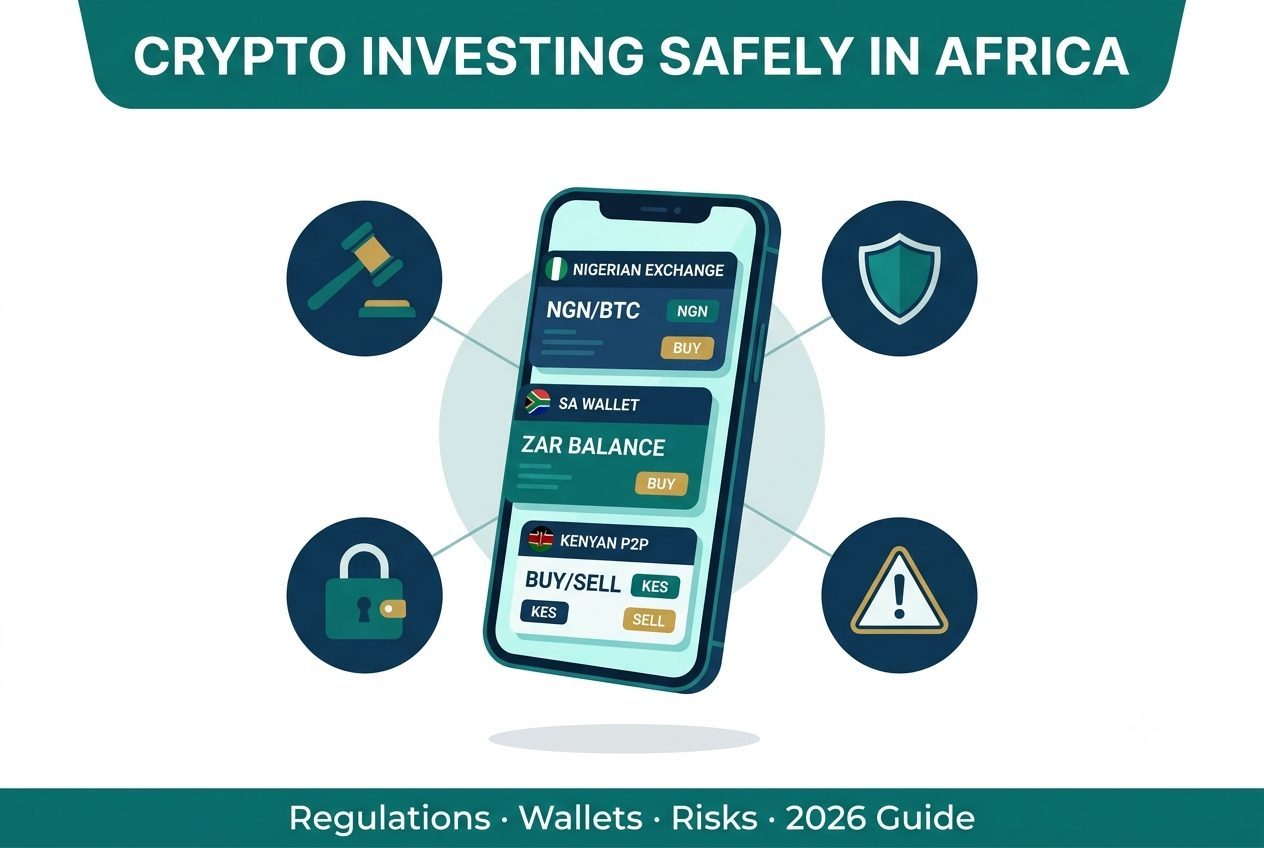
Putting everything in crypto — crypto is speculation, not investing. It belongs in a small, separate portion of your portfolio if at all
Your First Month Action Plan
Download Bamboo or Hisa this week. Complete KYC verification. Transfer your country equivalent of $10–$20. Buy one unit of a VOO or SPY ETF. Set a monthly reminder to add the same amount. Done. You are now an investor.