Break Paycheck Cycle in 2026: Wealth Building Tips
Discover how to build wealth and stop living paycheck to paycheck in 2026. Learn how to manage your finances effectively and break free from debt. Find out how to create a stable financial future, no matter your income level. Read now and start securing your tomorrow!
By Obed Avorlenu · · Updated July 17, 2026 · 7 min read
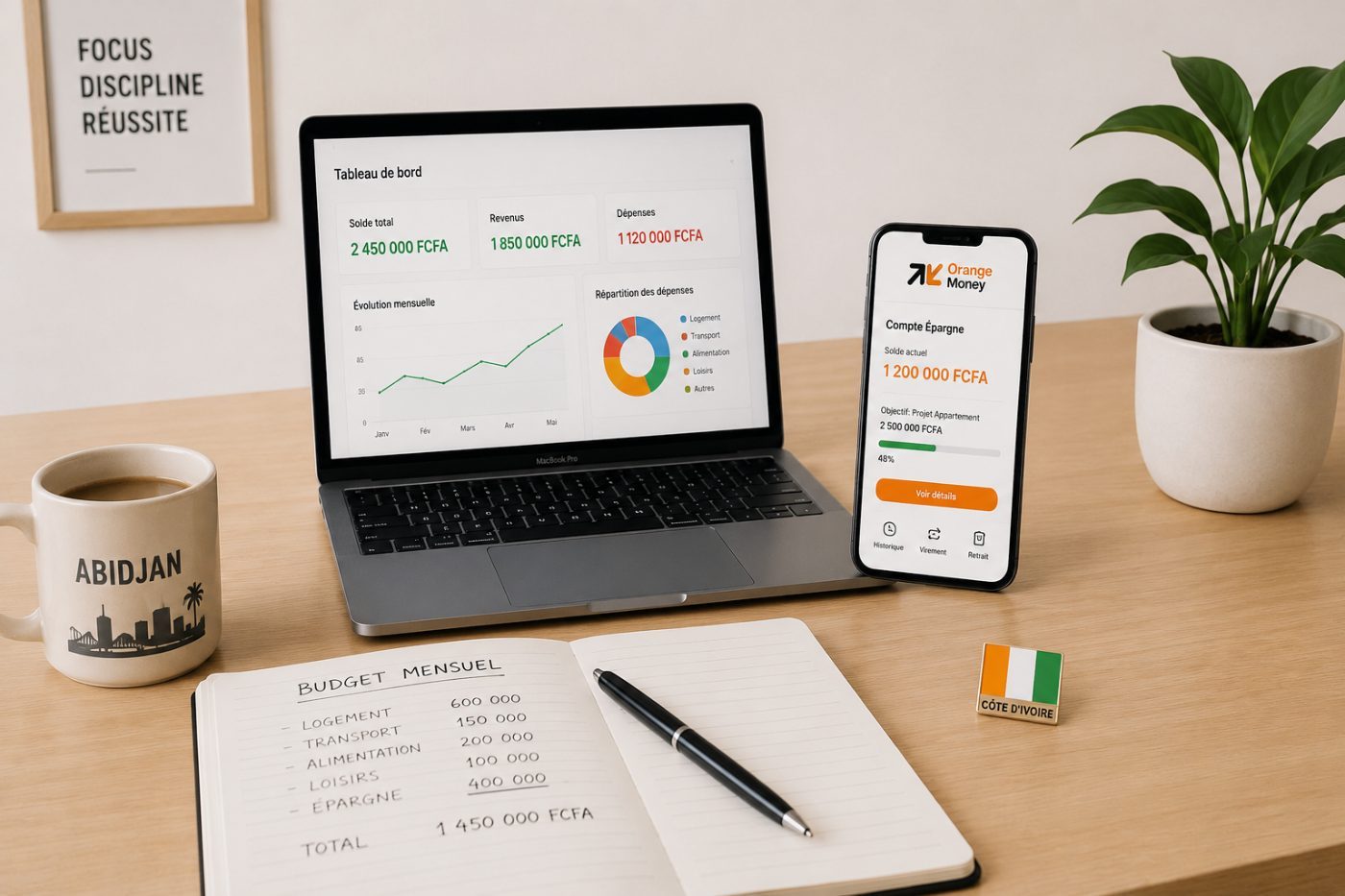
The Paycheck-to-Paycheck Cycle
You wake up. You check your bank balance. Your salary came in yesterday. You check it again today. It is already half gone.
Rent, transport, food, data, a little help for family, a few "small-small" expenses you cannot even remember. By the 25th, you are borrowing from your tontine or asking a friend for a "dépannage."
You are not alone. Financial expert Dr. Aka Serge Affian Tardy puts it bluntly: financial stability does not depend solely on your income level. It depends on how you manage what you have. As he says, "Better managing your money means better preparing your financial future".
Here is the hard truth: more money will not fix bad habits. If you cannot manage 200,000 FCFA, you will not manage 500,000 FCFA. You will just have more expensive problems.
The good news? The Ivorian financial ecosystem is evolving rapidly. Orange Money has evolved into Orange Bank Africa, offering savings and micro-credit services directly from your mobile phone. Platforms like Daba now allow you to invest in diversified portfolios with just a few clicks. And initiatives like the "Caravane Discipline Financière" are crisscrossing the country — from Korhogo to Yamoussoukro — teaching Ivorians how to budget, save, and invest.
The tools are here. The knowledge is here. The only thing missing is your commitment to change.
Here is your 6-step playbook to financial freedom in Ivory Coast in 2026.
Step 1: Track Every Single Franc for 30 Days
You cannot fix what you do not measure.
Exactly what to do:
Download a budgeting app. Use SmartFin APP or Compta Familial from the Google Play Store. Both allow you to track your budget, daily expenses, and link your bank and mobile money accounts.
Write down EVERY expense. Every coffee, every transport fare, every "I will just send 1,000 FCFA to my sister." Do this for 30 days.
Categorize your spending. Create 4 buckets: Essentials (rent, food, transport), Debt (loans, tontine payments), Savings (money you set aside), and Wants (everything else).
Review at the end of the month. Look at your "Wants" category. This is where your money disappears. This is where you will find your savings.
Ivorian context: Use Dexchange to track and manage your mobile money across Orange Money, MTN, and Moov. It lets you manage your portfolios and debts directly in the app.
Step 2: Create a Budget That Actually Works
A budget is not a punishment. It is a spending plan that tells your money where to go instead of wondering where it went.
Exactly what to do:
List your monthly income. Include salary, side hustles, and any other income.
List your fixed expenses. Rent, electricity (CIE), water (SODECI), internet, and school fees. These do not change.
List your variable expenses. Food, transport, data, entertainment. These are where you have control.
Apply the 50/30/20 rule:
50% for needs: Rent, food, utilities, transport
30% for wants: Data, entertainment, eating out
20% for savings and debt repayment: This is non-negotiable
Ivorian context: Experts recommend saving at least 10% of your salary monthly. But if you can hit 20%, you will build wealth much faster. The "Caravane Discipline Financière" emphasizes that "mastery of expenses, systematic savings, and investment planning" are the foundations of financial stability.
Step 3: Build an Emergency Fund (Before You Invest)
Before you think about stocks or real estate, you need a safety net.
Exactly what to do:
Set a target: Save 3 to 6 months of essential expenses. If you spend 300,000 FCFA monthly on rent, food, and transport, your target is 900,000 to 1,800,000 FCFA.
Open a dedicated savings account. Use Orange Bank Africa — it offers savings and micro-credit services starting from as little as 5,000 FCFA.
Automate your savings. Set up an automatic transfer from your salary account to your savings account on payday. If you never see the money, you will not miss it.
Do not touch this money. This is for emergencies only — job loss, medical emergencies, or urgent family situations.
Ivorian context: Traditional savings accounts at local banks offer returns of 3 to 4%. While safe, these returns are often lower than inflation. Your emergency fund is not for growing wealth — it is for protection. Keep it accessible, even if the returns are low.
Step 4: Start Investing — Your Money Should Work While You Sleep
Savings alone will not make you wealthy. Investing will.
The investment options available in Ivory Coast:
Traditional savings: Bank savings account | Risk Level: Very low | Typical Returns: 3–4%
Government bonds: Lend money to the state | Risk Level: Low | Typical Returns: 5–6%
Mutual funds (FCP): Pooled investments managed by professionals | Risk Level: Low to medium | Typical Returns: 6–7%+
Real estate: Buy land or property | Risk Level: Medium to high | Typical Returns: 8–15%+
BRVM stocks: Shares of companies listed on the regional exchange | Risk Level: Medium to high | Typical Returns: Varies
How to start investing in Ivory Coast in 2026:
Download the Daba app. Daba is an Ivorian investment platform that allows you to invest in diversified portfolios. Complete their investor profile quiz to determine if you are prudent, balanced, or dynamic.
Explore mutual funds (Fonds Communs de Placement / FCP). These are accessible, professionally managed, and regulated. As José Dié, Director General of CGF Gestion, explains: "Investment allows you to grow your savings and preserve its value over time, because inflation gradually erodes the purchasing power of idle funds".
Consider real estate. Dr. Aka Serge Affian Tardy recommends investing in real estate to "generate passive income that can improve living conditions in the long term".
Pro tip: Diversify. Do not put all your money in one place. Spread it across savings, mutual funds, and real estate to reduce risk while maximizing returns.
Step 5: Eliminate Bad Debt (And Use Good Debt Wisely)
Not all debt is created equal.
Bad debt: High-interest loans for things that lose value — consumer goods, electronics, or luxury items. This debt keeps you poor.
Good debt: Loans that build wealth — mortgages, business loans, or education loans. This debt can make you richer.
Exactly what to do:
List all your debts. Write down everything you owe — tontine payments, mobile money loans, bank loans, and money borrowed from friends.
Prioritize high-interest debt first. Pay off the most expensive debt first. This is usually mobile money loans or informal lenders.
Stop taking new bad debt. Do not borrow to buy a new phone or new clothes. Save and pay cash.
Use Orange Bank Africa's micro-credit responsibly. You can borrow as little as 5,000 FCFA instantly. Only borrow for productive purposes — not for consumption.
Ivorian context: The "Caravane Discipline Financière" warns against impulse buying and the search for immediate satisfaction, which are "often detrimental to household budget balance". Before you borrow, ask yourself: "Will this loan make me richer or poorer?"
Step 6: Plan for Retirement and Wealth Transfer
Financial freedom is not just about today. It is about your future and your family's future.
Exactly what to do:
Start planning for retirement now. Even if you are in your 20s or 30s. The earlier you start, the less you need to save each month.
Build a patrimony (family wealth). The "Caravane Discipline Financière" covers topics like "retirement preparation, building a patrimony, and family inheritance transmission".
Protect your family. Consider life insurance or health insurance. Orange Bank Africa offers life insurance through its mobile platform.
Write a will. It sounds morbid, but it protects your family and ensures your assets go where you want them to go.
The Hard Truth
Financial freedom is not about how much you earn. It is about how much you keep. Dr. Aka Serge Affian Tardy reminds us that "discipline, planning, and thoughtful investment remain the main levers of lasting economic success".
You will make mistakes. You will have months where you overspend. That is okay. The goal is progress, not perfection.
But here is what is not okay: doing nothing. Staying stuck in the same cycle of earning and spending. Watching your money disappear every month and wondering where it went.
Your 6-Step Action Plan
Track every expense for 30 days — use SmartFin or Compta Familial
Create a budget — apply the 50/30/20 rule
Build an emergency fund — 3 to 6 months of expenses in Orange Bank Africa
Start investing — download Daba, explore mutual funds (FCP)
Eliminate bad debt — pay off high-interest loans first
Plan for the future — retirement, patrimony, and family protection
Your Call to Action
Open your phone right now. Download SmartFin or Compta Familial. Start tracking your expenses today. Then download Daba and take their investor profile quiz.
Then drop a comment below: what is your biggest financial challenge right now? I will personally reply with specific advice for your situation.
Your financial freedom starts today. Not tomorrow. Today. 🇨🇮